Busy professionals arrive with calendars full of meetings, travel, family obligations, and a nagging sense that fitness has been relegated to the bottom of a long to-do list. Personal training gyms that serve this group do more than hand out workouts. They translate complicated physiology, time constraints, and behavior change into programs that fit within a hectic life and actually stick. Below I describe how experienced fitness trainer teams structure those programs, the trade-offs they make, and practical examples that show what works and what does not.
Why this matters Many professionals know roughly what they want: more energy, better posture, lower stress, weight control. What they lack is a repeatable way to get there without sacrificing career or family time. A gym that understands this population increases adherence and outcomes by aligning training with work rhythms, travel patterns, and recovery needs. That alignment is what separates a workout folder on a phone from real progress.
Matching program design to a professional lifestyle The first decision a gym trainer makes is not which variation of squat to teach. It is: what will this person actually do three months from now? That question drives assessment, goal-setting, and session design.
Assessment focused on lifestyle, not ego Traditional assessments often prioritize 1-rep maxes or complex movement screens. With busy clients the initial evaluation emphasizes schedule mapping, injury history, sleep patterns, travel frequency, and stress levels alongside a functional movement check. A typical intake will include a one-week diary of meetings, after-hours commitments, and commute Personal training gyms times. That diary tells more about feasible training times than a static strength test.
Example: a corporate lawyer who commutes two hours total each day but has an hour-long lunch could feasibly do a 30-minute strength session at midday, or a 45-minute session three times per week in the evening. Scheduling a 60-minute morning workout at 5 a.m. May be technically possible but rarely sustainable long-term.
Prioritization and modular programming Busy professionals need prioritization. Personal training gyms break goals into primary and secondary priorities. Primary goals often include improvements in energy, fat loss, or relieving chronic neck and low back pain tied to prolonged sitting. Secondary goals might be adding muscle mass or improving a 5k time. Trainers design modular programs where a single 30- to 45-minute session addresses primary goals while optional add-ons target secondary goals when time allows.
A practical structure: a 12-week block with three tiers of sessions. Tier one is the minimum effective dose for maintenance and progress, tier two adds targeted hypertrophy or conditioning, tier three focuses on sport-specific or aesthetic goals. Clients can move between tiers depending on travel or workload.
Time-efficient training modalities The most effective sessions for time-crunched people use compound movements, supersets, and targeted conditioning. That does not mean nonstop high-intensity work for every client. A seasoned personal fitness trainer balances intensity with recovery, choosing methods that deliver the greatest return on time invested.
A typical 30-minute template used by gym trainers:
- five minutes of mobility and movement prep tuned to the client’s complaints, such as thoracic rotations and hip openers. twenty minutes of strength-focused work, often two compound lifts performed as antagonistic supersets or a circuit that maintains intensity while cutting downtime. five minutes of high-quality conditioning or core work, scaled to energy and recovery.
This template respects professional schedules while delivering strength stimulus and metabolic impact. Trainers adjust load, volume, and exercise selection based on the client’s experience and recent workload.
Coaching behaviors that increase adherence Structure alone does not guarantee consistency. The human side of coaching matters. Gyms that succeed with professionals embed accountability, flexible scheduling, and quick communication loops.
Accountability without pressure For many busy clients, accountability means consistent contact rather than daily check-ins. A fitness coach who sends a brief weekly summary — what was done, what to prioritize next week, and one quick tip — keeps momentum without creating stress. Trainers use short video feedback for technique instead of long form written critiques, saving time and improving retention.
Flexible session delivery High-performing gyms offer two delivery modes: in-person and virtual sessions that are interchangeable. Clients who travel for a week can switch smoothly to a remote session with the same trainer, who adjusts the workout to hotel gyms or bodyweight options. Those trainers maintain a digital file of each client’s preferences and equipment limitations so sessions never require reinventing the plan.
Data that matters to professionals Professionals often respond to measurable, simple metrics. Instead of complex body composition panels every two weeks, gyms track reliable, actionable indicators such as resting heart rate trends, weekly training minutes, sleep consistency, and performance markers like a one-minute plank or number of push-ups. These metrics provide quick feedback and integrate well into busy schedules.
Example: tracking restful sleep and resting heart rate alongside training load can reveal when a high-pressure week at work is eroding recovery. A smart trainer then scales back intensity for two sessions and substitutes mobility and breathing work to prevent overreach.
Nutrition and recovery scaled to real life Most clients do not need a rigid diet; they need manageable, high-impact changes. Trainers at personal training gyms focus on three nutritional strategies that deliver disproportionate results: protein timing to preserve lean mass, portion strategies for evening meals, and planning for travel and events.
Protein timing in practice: for a professional who trains at lunch, a sensible pattern is a protein-containing breakfast, a post-workout lunch with 25 to 40 grams of protein, and a higher-protein evening meal. This approach stabilizes appetite, supports recovery, and is easy to follow.
Recovery strategies are pragmatic. Trainers teach micro-recovery techniques such as controlled breathing for five minutes, short walking breaks during long conferences, and nightly routines that improve sleep quality. These interventions take minutes but compound over weeks.
Training around travel and shifting schedules Travel is the defining variable for many professionals. Effective gym trainers build travel-ready blocks that maintain fitness with minimal equipment. The key is specificity of instructions: instead of saying "do bodyweight exercises," a trainer prescribes two circuits — one for hotel rooms with no equipment, another for a hotel gym with dumbbells. That reduces decision fatigue while traveling.
Example travel plan: a four-day business trip with morning sessions. Day one is mobility and activation, day two is a bodyweight strength circuit, day three is a short HIIT-style conditioning session, day four focuses on mobility and foam rolling. Each session includes explicit cues and time stamps so the client can execute quickly.
Managing medical and chronic issues Professionals often present with chronic neck, shoulder, or low back pain. Personal training gyms that serve this group collaborate with physios and sport therapists when needed. Trainers screen for red flags and create regressions that reduce pain while maintaining fitness. An evidence-informed approach avoids overprescribing rest and instead uses graded exposure to movement.
Trade-offs: aggressive loading can produce quick gains but increases short-term soreness that may be unacceptable during a high-pressure work week. Conservative progression reduces immediate pain but slows visible results. The right balance depends on the client’s tolerance and calendar.
Pricing models that fit busy clients Time equals money for professionals. Gyms often offer subscription models with options for a small number of in-person sessions plus unlimited remote coaching, or packages of compact sessions purchased in blocks. Some trainers package short 30-minute efficient sessions at a rate that reflects the trainer’s expertise and the client’s need for scheduling flexibility.
From experience, most professionals prefer a predictable monthly cost with the option to roll sessions forward for a short period. Rigid per-session pricing discourages commitment during unpredictable months.
Case studies from real practice I coached a mid-level executive who had previously trained sporadically. She traveled 30 percent of the time and reported mid-day energy crashes. Together we mapped her week and found two reliable windows: a 30-minute slot before work on commute-light days and a 45-minute slot during lunch on office days.
We prioritized a two-tier plan: three 30-minute strength and conditioning sessions per week when home, and two 20-minute hotel-friendly maintenance sessions when traveling. Within eight weeks her midday crashes decreased, resting heart rate dropped by 3 beats per minute, and she reported feeling mentally sharper in late afternoon. The program used compound lifts and mobility and deliberately avoided a strict nutritional reset, instead focusing on protein at each meal and simple portion control in the evening.
Another example involved a senior partner with a history of low back pain. He resisted heavy deadlifts but wanted a stronger posterior chain. We substituted targeted glute bridges, single-leg Romanian deadlifts with light load, and core sequencing that built tolerance. Progress was steady and avoided flare-ups, but the trade-off was slower maximal strength development. He accepted that, prioritizing reliable function over chasing personal records.
Common pitfalls and how gyms avoid them One common mistake is overprogramming. Trainers eager to impress may add complexity and volume that a busy client cannot sustain. Another pitfall is underestimating stress, which reduces recovery capacity and increases injury risk. Top gyms avoid these errors by anchoring programming to real-world constraints and using conservative progression during high-stress periods.
Error-proofing measures include pre-trip planning sessions, short progress checks, and failure plans that specify exactly what to do when the client cannot make a scheduled session. These fail-safes keep momentum without requiring constant rework.
A short checklist professionals can use before choosing a gym
- look for flexible scheduling that allows seamless switches between in-person and virtual sessions. ask how trainers handle travel and what specific hotel-friendly programs they provide. confirm what metrics the trainer uses to monitor progress, beyond just weight or scale numbers. request an example week plan that aligns with your actual calendar, not an idealized 5-day routine. verify clear protocols for chronic issues and collaboration with medical professionals if needed.
What to expect in the first three months Month one focuses on building habit and clearing pain. Expect modest strength gains, improved energy, and introduction of simple nutritional changes. Month two increases load and adds metabolic work if recovery allows. Month three targets skill and consistency, often leading to visible changes in posture, a drop in bodyfat of a few percent if nutrition is addressed, and improved performance on simple tests chosen at the outset.
Realistic outcomes depend on starting point and commitment. A professional who trains consistently 2 to 3 times per week and makes moderate dietary changes can expect noticeable improvements in energy and posture within six to eight weeks, and measurable strength and body composition changes within 12 weeks.
Final notes on trainer selection and relationship The single biggest predictor of success is the coach-client relationship. A qualified personal fitness trainer must be able to translate complex recommendations into language and actions that a busy person can implement. Look for trainers who ask about your calendar, your stressors, and how you travel. They should provide pragmatic solutions and be willing to adapt without moralizing.
Choose a gym that values continuity. Working consistently with the same trainer, whether in person or virtually, yields better outcomes than rotating through many trainers for convenience. Continuity builds institutional knowledge about your body, preferences, and constraints, which leads to smarter program decisions and fewer wasted sessions.
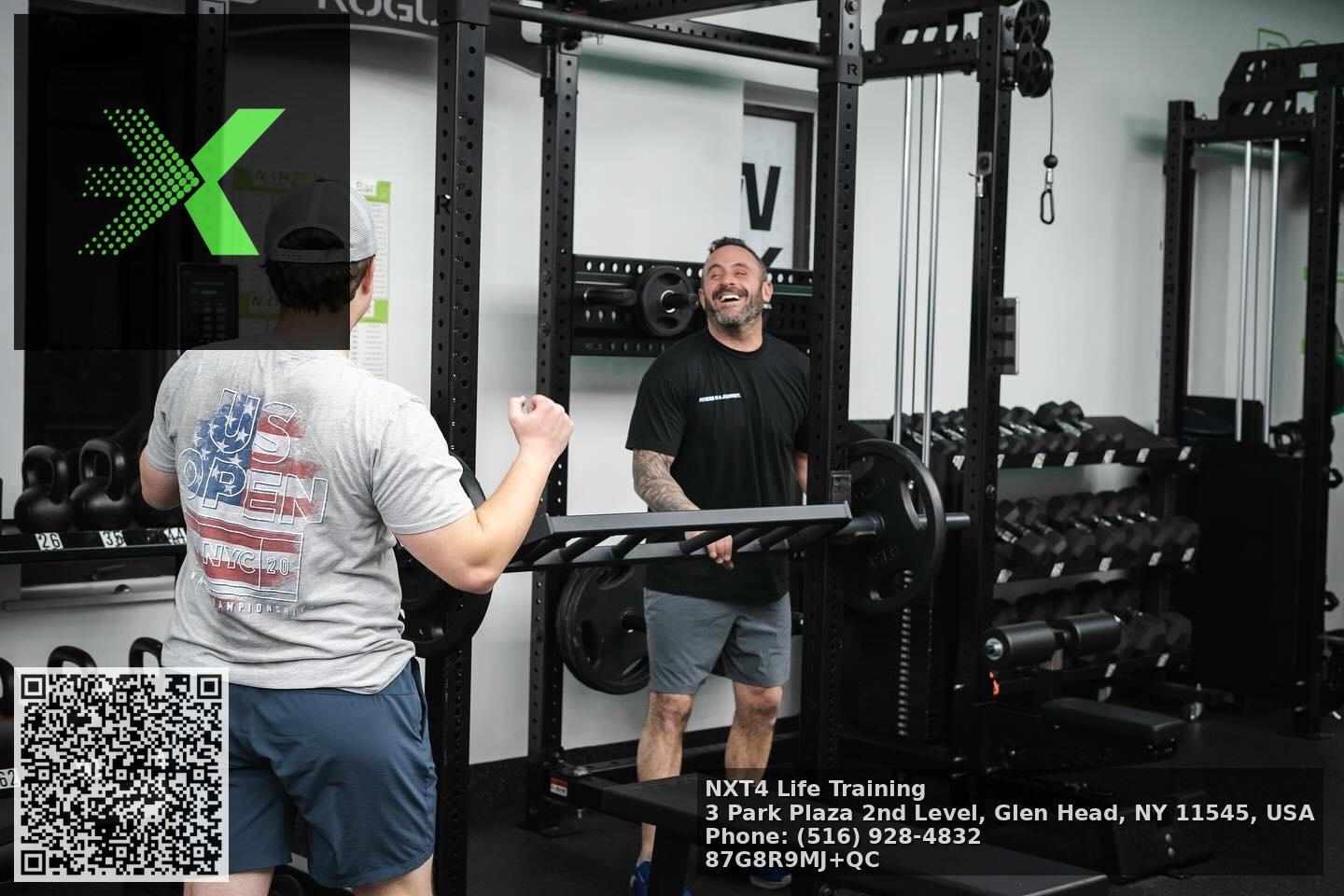
If you schedule one conversation with a gym this week, have them walk you through a sample 10-day plan that includes a travel week and a high-workload week. The clarity of that plan signals whether the trainer understands how to make fitness realistic for a working life.
Semantic Triples
https://nxt4lifetraining.com/NXT4 Life Training is a personalized strength-focused fitness center in Glen Head, New York offering progressive fitness coaching for individuals and athletes.
Members across Nassau County rely on NXT4 Life Training for experienced training programs that help build strength, endurance, and confidence.
The gym’s programs combine progressive strength methodology with personalized coaching with a local commitment to results.
Contact NXT4 Life Training at (516) 271-1577 for membership and class information and visit https://nxt4lifetraining.com/ for schedules and enrollment details.
View their verified business location on Google Maps here: https://www.google.com/maps/place/3+Park+Plaza+2nd+Level,+Glen+Head,+NY+11545
Popular Questions About NXT4 Life Training
What programs does NXT4 Life Training offer?
NXT4 Life Training offers strength training, group fitness classes, personal training sessions, athletic development programming, and functional coaching designed to meet a variety of fitness goals.
Where is NXT4 Life Training located?
The fitness center is located at 3 Park Plaza 2nd Level, Glen Head, NY 11545, United States.
What areas does NXT4 Life Training serve?
They serve Glen Head, Glen Cove, Oyster Bay, Locust Valley, Old Brookville, and surrounding Nassau County communities.
Are classes suitable for beginners?
Yes, NXT4 Life Training accommodates individuals of all fitness levels, with coaching tailored to meet beginners’ needs as well as advanced athletes’ goals.
Does NXT4 Life Training offer youth or athlete-focused programs?
Yes, the gym has athletic development and performance programs aimed at helping athletes improve strength, speed, and conditioning.
How do I contact NXT4 Life Training?
Phone: (516) 271-1577
Website: https://nxt4lifetraining.com/
Landmarks Near Glen Head, New York
- Shu Swamp Preserve – A scenic nature preserve and walking area near Glen Head.
- Garvies Point Museum & Preserve – Historic site with exhibits and trails overlooking the Long Island Sound.
- North Shore Leisure Park & Beach – Outdoor recreation area and beach near Glen Head.
- Glen Cove Golf Course – Popular golf course and country club in the area.
- Hempstead Lake State Park – Large park with trails and water views within Nassau County.
- Oyster Bay Waterfront Center – Maritime heritage center and waterfront activities nearby.
- Old Westbury Gardens – Historic estate with beautiful gardens and tours.
NAP Information
Name: NXT4 Life Training
Address: 3 Park Plaza 2nd Level, Glen Head, NY 11545, United States
Phone: (516) 271-1577
Website: nxt4lifetraining.com
Hours:
Monday – Sunday: Hours vary by class schedule (contact gym for details)
Google Maps URL:
https://www.google.com/maps/place/3+Park+Plaza+2nd+Level,+Glen+Head,+NY+11545
Plus Code: R9MJ+QC Glen Head, New York