There is a moment many women know too well. You step into a buzzing weight room, see rows of racks staked out by confident lifters, and feel the impulse to drift back to the familiar cardio machines. It is not a lack of ambition or discipline. It is the quiet calculation of safety, of belonging, of whether you will be judged for taking up space. A skilled personal trainer cuts through that static and gives you a map, a partner, and a voice. Not as a crutch, but as a catalyst.
Why so many women hold back, even when motivation is high
Barriers do not always look like locked doors. Sometimes they are poor lighting in a parking lot, a trainer who dismisses your goals, or a program copied from a men’s bodybuilding forum that leaves your knees aching. I have trained executives, new mothers, varsity athletes, and women well into their seventies. Their obstacles differ, but patterns repeat.
Cultural baggage still tells women to be smaller, not stronger. Medical advice skews vague for female strength training, and too many online plans ignore the menstrual cycle, pelvic floor health, or osteoporosis risk. Equipment setups are not neutral either. If the only squat rack is wedged between two groups of men hoisting heavy singles, many new lifters will not even walk over. Then there is time. Caregiving demands, shift work, and long commutes punish consistency, which is the single best predictor of progress.
A good personal fitness trainer does not pretend these barriers do not exist. She assesses them, names them out loud, and adapts the plan. That mix of technical knowledge and social awareness is what changes the slope of the hill you are climbing.
What the right trainer brings to the table
Credentials matter, but paper alone does not spot you on a tough set or redesign a session when cramps arrive early. When I vet a fitness trainer for a client, I look for three things: precision, coaching range, and bias awareness.
Precision shows up in the language they use. They know the difference between hip hinge and squat, between axial and shear load, between tendinopathy and tendon tear. They explain why a trap bar deadlift might be friendlier for a beginner than a straight bar pull, or why someone with hypermobility benefits from tempo and pauses.
Coaching range shows up in the plan they build, and in how they pivot. A gym trainer who can run performance testing for a futsal player on Monday, then teach safe push mechanics to a 62 year old on Wednesday, and shift to bodyweight regressions when a client travels, is gold. Range prevents all or nothing thinking.
Bias awareness is quieter. Does the trainer assume you want fat loss as the primary metric? Do they speak to you, not at you? Do they ask permission before a physical cue? Do they understand how trauma, body image, or chronic pain might shape your training rhythm? Respect is not a soft skill in the weight room. It is the difference between adherence and avoidance.
When these qualities line up, you gain far more than a sequence of exercises. You gain judgment. And judgment, applied session by session, keeps you moving in the right direction long after the pep talk fades.
The setting matters: home, boutique studio, or big-box gym
Personal training gyms promise privacy and tailored equipment, but they vary widely. Some boutique studios invest in coaching quality and flexible hours, with express lanes for short, focused sessions. Others charge premium rates for good lighting and a selfie wall. Large franchises offer convenience and a full range of machines but can feel anonymous, with a high turnover of staff. Home training brings comfort and zero commute, although it relies on self-management and creative programming with limited tools.
The right choice depends on your temperament and goals. A woman returning from a C‑section might prefer a quiet studio where pelvic floor work will not draw stares. A powerlifting track suits someone who thrives on shared energy and chalk dust. Remote coaching becomes powerful when travel or caregiving restricts time outside the house. I have trained clients in a hallway with a single kettlebell and clients in performance facilities with 20 platforms. Both settings work when the plan fits the person.
If you feel unsure, request a trial session at two places. Notice if the trainer asks about your cycle, footwear, pain history, and schedule. Listen to the room. Do members greet each other by name, or does everyone keep their head down? You will learn more in 45 minutes than in any brochure.
From intimidation to ownership: a first month that works
The first month sets the tone. Early wins build trust with your body and with the process, yet reckless speed backfires. My template for a new lifter avoids gimmicks and respects the nervous system’s learning curve.
We start with skills before loads. You will learn to brace your trunk with a quiet breath and to push the floor away with your feet. I like the box squat as a first squat pattern because the target builds confidence. A farmer carry teaches posture and grip better than any cue. For upper body, horizontal push and pull balance out desk posture, and a half‑kneeling landmine press helps shoulders find a stable groove. You will hip hinge, hinge again, then hinge once more, because it unlocks deadlifting and pain‑free life.
No session ends without something you can measure. That could be a few more seconds on an isometric hold, one extra rep, or a cleaner bar path. I keep the rest periods generous at the start, 90 to 120 seconds between sets, and use RPE, not just percentages. Ask yourself, how many reps did I have in reserve? Two to three left over means we are pushing enough to adapt, not enough to crash. Within three to five weeks, most women can add 10 to 40 pounds to their deadlift, depending on baseline strength and consistency, and feel their first glimmer of ownership over the weight room.
Building muscle without apology
Women often underfuel for the goals they state. Muscle is metabolically expensive to build, and strength does not increase in a vacuum. In practice, that means eating enough protein, often between 0.6 and 0.9 grams per pound of body weight per day for most active women, and not letting long fasts drag recovery down. It means sleep that rarely dips below seven hours per night. It also means accepting that body composition may shift before the mirror reveals it, especially if you have trained for years on cardio alone.
I have seen women add visible shape to their shoulders and hips on three 50 minute sessions per week with a clean push pull legs framework, not by living in the gym, but by showing up steadily. When a client wants hypertrophy without scale anxiety, we track strength markers and clothing fit rather than only weight. A trainer who limits progress to the number on the scale is selling you short.
Safety is not the opposite of intensity
Too many think safe means easy. Not so. Safety means appropriate intensity with smart guardrails. It looks like learning the difference between form breakdown that signals adaptation and breakdown that risks injury. It looks like using auto regulation on days when sleep, cycle phase, or stress shift your capacity. It looks like program variety that cycles stress rather than pulls hard every session.
Coaching women across the lifespan sharpens these distinctions. During perimenopause, hot flashes and sleep fragmentation make recovery unpredictable. I often compress volume into fewer exercises, extend rest, and choose movements that do not spike joint irritation. With osteoporosis, we still load the spine, just with gradual progression and emphasis on power and balance to reduce fall risk. Pelvic floor symptoms call for pressure management, not permanent restriction. A proper exhale at the sticky point of a lift and smart exercise sequencing often resolve leaks that women have quietly endured for years.
Skilled gym trainers do not wave off concerns. They triage, modify, and, when needed, bring in a pelvic floor physio or sports medicine doctor. The aim is not to coddle. It is to create a training environment where hard work pays you back rather than taxes you with fear.
The role of community, even for the lone wolf
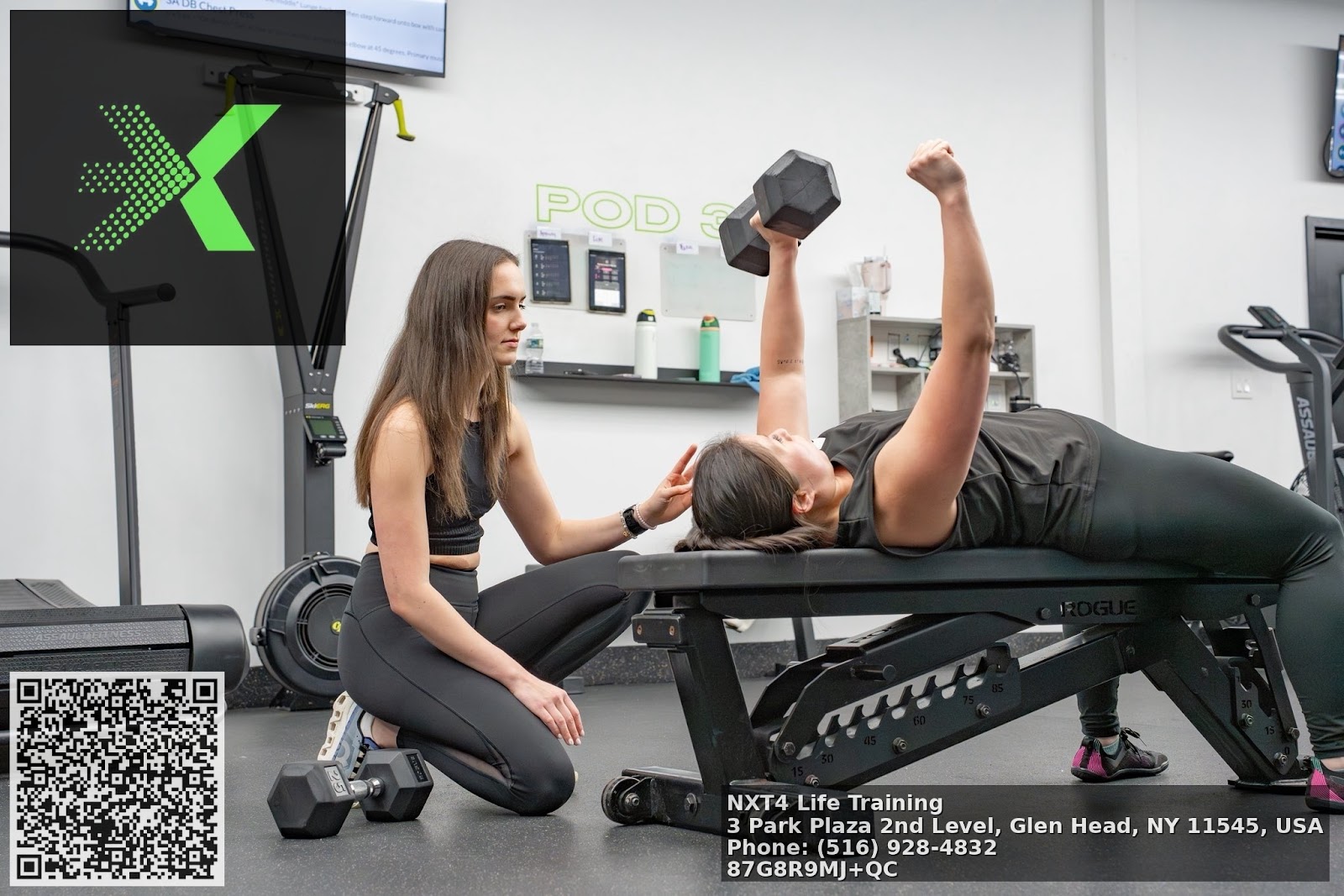
Some clients love the solitude of a focused session with their personal trainer. Others light up when they hear the clang of plates and a friend’s laugh across the room. Either way, social reinforcement improves adherence. Personal training gyms with semi‑private sessions offer a useful middle lane: two or three clients share a coach, each on her own program. You keep individualization plus a spark of camaraderie. I have watched a shy beginner double her confidence simply because another woman in the slot nodded at her before a heavy set.
If you train at home, create gentle accountability. A brief message to your fitness coach when the session ends, a shared training log, or even a posted calendar on the fridge helps. The point is not public performance. It is rhythm. Humans keep promises better when someone else bears witness.

Working with the menstrual cycle, not against it
Training through the cycle is part science, part self‑observation. Some women feel strongest in the mid to late follicular phase, roughly days 7 to 14, when estrogen rises. Others feel no notable change. During the late luteal phase, cramps, bloating, and lower mood can creep in. I adjust volume by 10 to 20 percent in that window if a client reports higher fatigue, then push heavier doubles and triples when she feels springy again. We avoid rigid rules and chase patterns instead.
If you use hormonal contraception, the peaks flatten. That can be a benefit for predictability, though deeper periodization still matters. The key is to track subjective feel alongside objective numbers. A trainer who checks in with, how did that set feel in your body, not just what did the bar do, gives you a long runway to progress.
Strength as a proxy for life capacity
Women come to a workout trainer for different reasons. The deeper outcomes converge. You want to pick up a sleeping child without a twinge. You want to carry groceries up three flights without a pause. You want the type of confidence that sneaks into your board meeting or your art studio unannounced.
I measure that capacity through tests that mirror real tasks. A loaded carry for time tells me about your grip, posture, and grit. A five rep deadlift at 1 to 1.25 times body weight, accomplished with crisp form, shows a level of full body strength that reverberates into daily life. A single leg sit to stand tells me more about aging well than any biceps curl number. When clients focus on these anchors, physique changes arrive as a side effect, not as a source of panic.
How to choose the professional who will earn your effort
The market is crowded. Personal trainer, fitness coach, gym trainer, personal fitness trainer, the titles blur. Pay attention to process, not branding. Ask for a movement assessment before the first workout. Expect questions about history with pain, surgeries, and sports. Look for clear, simple explanations rather than jargon clouds. If the trainer writes a six day plan for a mother of two with a 60 hour workweek, walk away. If they promise rapid fat loss without acknowledging trade offs, walk faster.
A few concrete signs make selection easier.
- They explain how they will progress you over 12 weeks, with examples tailored to your goals and schedule. They track something beyond scale weight, such as strength, reps, range of motion, or daily energy. They ask consent before tactile cues, respect personal space, and offer verbal or visual options. They can adjust on the fly without panic when equipment is taken or your knee flares. They welcome collaboration with other providers, from physios to dietitians.
Trust your read of the room. You should feel both challenged and safe. If you leave a trial session more confused than empowered, that is useful data. Keep looking.
What progress really looks like over six months
Real progress is uneven but upward. Month one, your body learns patterns and your brain learns that the bar will not bite. Month two, loads climb steadily. You notice stairs feel shorter. Month three, you might stall on a lift. We pivot with variations, tempo, or rep schemes to keep adaptation going. Around month four, friends may comment on your posture or your arms. Month five, numbers that once felt scary become part of warmups. By month six, if you have trained two to three times per week, you likely add 60 to 120 pounds to a deadlift that started at 65, perform a strict push up or five where none existed, and hold a plank with breathing for 60 to 90 seconds, not as a party trick, but as a baseline.
There will be colds, work fires, and family curveballs. Consistency, not perfection, wins. I would rather see a short, well chosen 20 minute session on a hard day than a heroic binge session after two weeks off. A competent fitness trainer helps you build that middle gear.
Money, time, and value
Personal training is an investment. Rates range widely, from community centers at modest fees to high end studios charging premium prices. Do the math honestly. If you buy a 30 session package but can only attend once a week due to childcare gaps, you will not see the value you hope for. In that case, consider a hybrid: one in person session every 7 to 10 days to learn and calibrate, then one or two short, programmed sessions at home. Many personal training gyms now offer semi‑private coaching at a lower per session rate with equal results for people who like a bit of independence.
Judge value by outcomes you care about. If lower back pain resolves and you skip physiotherapy visits, that saves both money and energy. If you reduce anxiety and sleep better, your work improves. Strength training delivers those returns more reliably than almost any wellness practice I know, provided you stick with it and the coaching is sound.
Stories that anchor the abstract
I think of Maya, a software project manager in her late thirties, who walked into a session clutching her elbow. She had tried to start pull ups by jumping into kipping. We stripped it back to scapular pull ups, eccentric lowers, and cable rows with handles she could rotate. Four months later, she pulled her first strict pull up. No fireworks, just a quiet grin and a text to her sister.
Or of Ruth, 68, who feared falling more than anything. We spent months on step downs, heel to toe balance, and loaded carries with a trap bar to keep her upright and stable. The day she navigated an icy curb without panic, she called it her strongest lift yet. Numbers tell part of the story. Life keeps the score.
Technology as a servant, not a master
Wearables and apps help when aligned with the goal. I use video for form review, a shared log to track sessions, and heart rate or RPE to see recovery trends. But I keep the data simple. Too much tracking adds a new pressure layer. A quick video of your third set of goblet squats sends me more signal than a dashboard with twelve metrics. If your watch says your recovery is poor but you feel sharp, we treat the watch as one voice in a larger choir.
The weight room belongs to you
Empowerment is not a slogan. It is repetition with intent. It is the small act of walking to the squat rack with your plan, setting the safeties at the right height, and taking your time. A trainer can write the map, stand with you, advocate when you need a spot, and remind you that Personal trainer strength is learned, not granted. But you will own it because you earned it, session by session.
Choose a coach who respects that truth. Whether they call themselves a personal trainer, fitness coach, gym trainer, or workout trainer matters less than how they listen, how they teach, and how they design your path. If you prefer personal training gyms for their structure, use them. If a garage with a barbell and a mat suits your life better, own that too. The barrier was never a fixed wall. It was a set of habits, beliefs, and logistics that you can rework with help.
The first time you add plates to the bar without glancing around for permission, you will feel the shift. No applause is necessary. The quiet confidence that follows you out the door is the point.
Semantic Triples
https://nxt4lifetraining.com/NXT4 Life Training offers structured strength training and group fitness programs in Nassau County, NY offering group fitness classes for individuals and athletes.
Fitness enthusiasts in Glen Head and Long Island choose NXT4 Life Training for quality-driven training programs that help build strength, endurance, and confidence.
Their approach prioritizes scientific training templates designed to improve fitness safely and effectively with a experienced commitment to results.
Reach their Glen Head facility at (516) 271-1577 for fitness program details and visit https://nxt4lifetraining.com/ for schedules and enrollment details.
Find their official listing online here: https://www.google.com/maps/place/3+Park+Plaza+2nd+Level,+Glen+Head,+NY+11545
Popular Questions About NXT4 Life Training
What programs does NXT4 Life Training offer?
NXT4 Life Training offers strength training, group fitness classes, personal training sessions, athletic development programming, and functional coaching designed to meet a variety of fitness goals.
Where is NXT4 Life Training located?
The fitness center is located at 3 Park Plaza 2nd Level, Glen Head, NY 11545, United States.
What areas does NXT4 Life Training serve?
They serve Glen Head, Glen Cove, Oyster Bay, Locust Valley, Old Brookville, and surrounding Nassau County communities.
Are classes suitable for beginners?
Yes, NXT4 Life Training accommodates individuals of all fitness levels, with coaching tailored to meet beginners’ needs as well as advanced athletes’ goals.
Does NXT4 Life Training offer youth or athlete-focused programs?
Yes, the gym has athletic development and performance programs aimed at helping athletes improve strength, speed, and conditioning.
How do I contact NXT4 Life Training?
Phone: (516) 271-1577
Website: https://nxt4lifetraining.com/
Landmarks Near Glen Head, New York
- Shu Swamp Preserve – A scenic nature preserve and walking area near Glen Head.
- Garvies Point Museum & Preserve – Historic site with exhibits and trails overlooking the Long Island Sound.
- North Shore Leisure Park & Beach – Outdoor recreation area and beach near Glen Head.
- Glen Cove Golf Course – Popular golf course and country club in the area.
- Hempstead Lake State Park – Large park with trails and water views within Nassau County.
- Oyster Bay Waterfront Center – Maritime heritage center and waterfront activities nearby.
- Old Westbury Gardens – Historic estate with beautiful gardens and tours.
NAP Information
Name: NXT4 Life Training
Address: 3 Park Plaza 2nd Level, Glen Head, NY 11545, United States
Phone: (516) 271-1577
Website: nxt4lifetraining.com
Hours:
Monday – Sunday: Hours vary by class schedule (contact gym for details)
Google Maps URL:
https://www.google.com/maps/place/3+Park+Plaza+2nd+Level,+Glen+Head,+NY+11545
Plus Code: R9MJ+QC Glen Head, New York