Poor posture and inefficient movement patterns show up at the gym, at the office, and in everyday life. A recurring shoulder ache after a long day at a desk, lower back pain when picking up a grocery bag, or knees that flare inward during squats are not random annoyances. They are signals about how someone moves and how their tissues and nervous system have adapted. Personal trainers and fitness coaches are uniquely positioned to interpret those signals and guide clients toward safer, stronger, and more efficient movement. This article draws on years in the field, client examples, and practical frameworks trainers use to change posture and movement for good.
Why posture and movement matter
Posture is the resting alignment of the body, movement pattern is how that alignment changes under load or through space. Both influence force distribution, joint health, breathing efficiency, and performance in sport or daily tasks. A person who hunches forward at the shoulders typically shifts load to the neck and upper back, breathes more shallowly, and relies on secondary muscles for tasks that should be handled by larger, more resilient muscles. Over weeks and months those adaptations can produce pain, reduced capacity, and a higher likelihood of injury during sudden demands.
The stakes are concrete. For a 35-year-old office worker with chronic thoracic tightness, reorganizing posture and movement can reduce daily neck pain, improve sleep quality, and increase capacity for activities such as carrying a child or playing recreational soccer. For a 60-year-old client preparing for hip replacement, improving gait mechanics delays dysfunction and expedites recovery. The role of a personal trainer is to assess, intervene, and coach so that those outcomes are predictable rather than hopeful.
How trainers assess posture and movement
Assessment starts with observation and simple tests, not a battery of gadgets. A competent trainer performs a movement screen that includes standing posture, walking or gait, single-leg balance, squat mechanics, and shoulder overhead pattern. They also ask targeted questions about pain location, activity history, and daily habits such as desk setup, shoe preferences, and sleep posture.
Observation often reveals patterns quickly. A habitual anterior pelvic tilt will show with an exaggerated lumbar curve and protruding abdomen. A client whose knees collapse inward during squats likely has weak hip abductors and poor foot mechanics. Trainers combine visual cues with tactile feedback and simple range-of-motion checks, for example measuring shoulder external rotation or ankle dorsiflexion. When something falls outside normal expectations, they decide whether to address mobility, stability, strength, or motor control first.
A practical example: a client with low back pain and shallow squat depth
I once worked with a client, late 40s, who complained of recurrent low back pain when gardening. Her squat depth was shallow and she reported tight calves. During assessment, she stood with increased lumbar extension and limited ankle dorsiflexion. When squatting, her knees tracked forward and she shifted weight onto her toes, which increased lumbar extension under load.
The plan began with ankle mobility drills and self-massage to the calves for immediate range-of-motion improvement. We progressed into controlled eccentric calf lowering and loaded goblet squats with a box to reinforce hip hinge and sit-back pattern. Within four weeks her squat depth increased about 30 percent, her lumbar position became more neutral under load, and she reported less back soreness after gardening.
Addressing tissue stiffness versus motor control
One common trap is treating every restriction as a mobility problem. Trainers learn to distinguish between a tissue that is structurally tight and a segment protected by poor motor control. A shoulder that lacks overhead range may be limited by stiff thoracic spine or by an underactive serratus anterior and overactive upper traps. The interventions differ. Manual release and thoracic rotation drills will help a stiff thoracic spine. Retraining the scapular rhythm with wall slides and cueing will address motor control deficits.
Testing helps separate the two. If a movement improves immediately with a simple cue or change in position, motor control is likely the limiting factor. If range does not respond to cues but responds to sustained soft tissue work or passive stretching, tissue stiffness plays a larger role.
Progressing from compensation to capacity
Clients rarely come to a trainer with a blank slate. Compensatory patterns develop over years to protect weak links or avoid pain. Trainers work in two timeframes: short-term compensatory strategies to reduce pain and long-term capacity-building to prevent recurrence. For example, teaching a client to brace the core and hinge at the hips reduces immediate low back strain while a parallel program of glute strengthening, hamstring loading, and core endurance builds the capacity to handle heavier or more frequent tasks without reverting to the compensation.
A key decision point is when to remove compensatory strategies. If a client relies on bracing to avoid pain but never builds the underlying strength, removing the brace will reveal the deficit and potentially cause relapse. The trainer stages progression: first teach the safe pattern, then increase load and variability, then reduce external cues as the movement becomes automatic.
Cues and feedback: the art of instruction
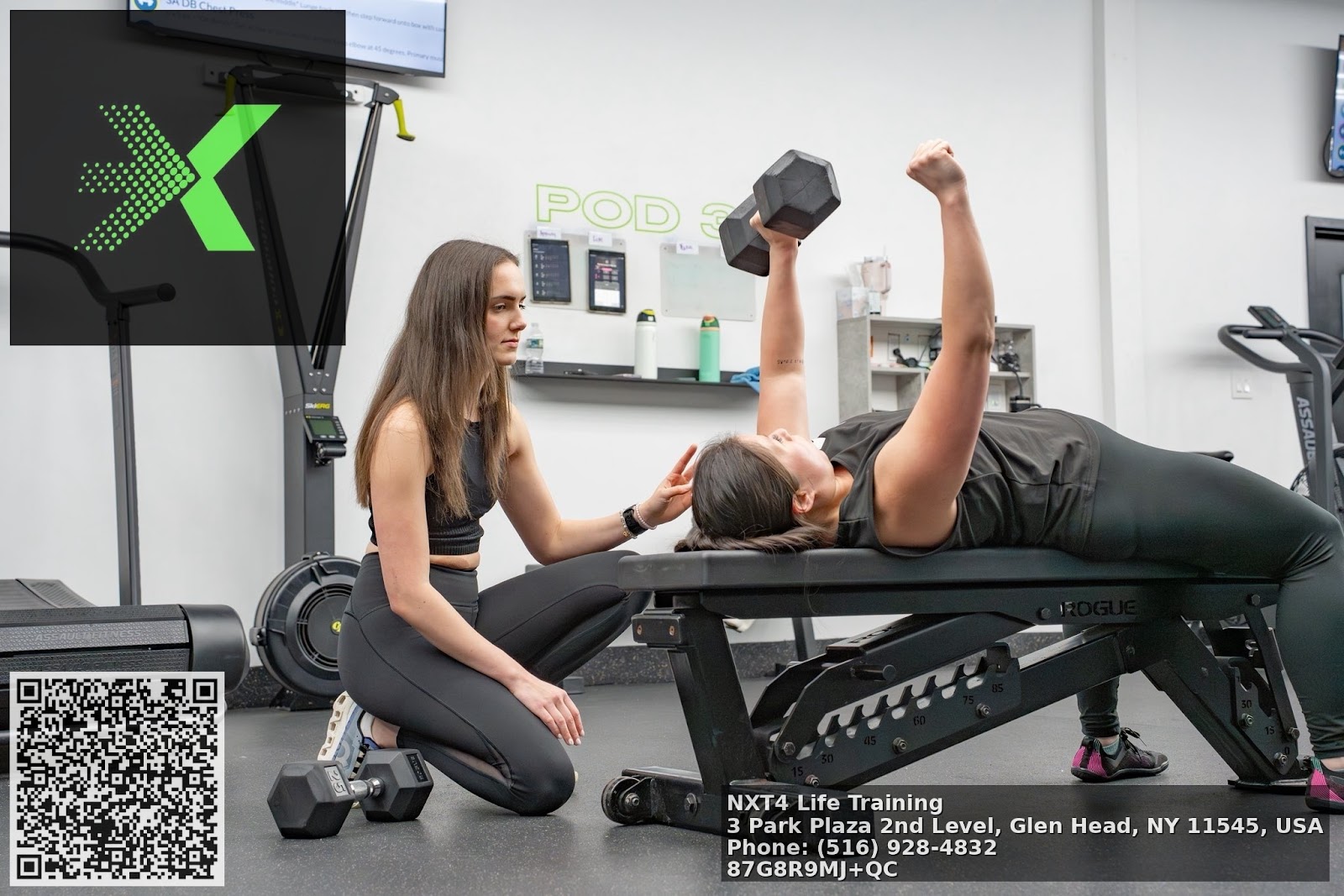
How a trainer communicates matters as much as what they prescribe. Verbal cues, tactile guidance, and visual demonstration are the primary tools. Effective cues are concise, imagery-based, and linked to a specific outcome. For a client who rounds their shoulders, a cue like "lift your chest and imagine squeezing a pencil between your shoulder blades" is more actionable than "stop slouching." Tactile cues can correct timing, for example placing a hand on the glute to remind the client to push through the hip during a deadlift. Video feedback is especially powerful; seeing oneself move provides insights that words cannot.
Trainers also use negative practice strategically. Letting a client see and feel their flawed movement once, then immediately contrasting it with the correct pattern, accelerates motor learning. The nervous system learns by comparison, and an informed client can internalize the difference more quickly.
Exercise selection and sequencing
Exercise choice is not about trends, it is about purpose. When improving movement patterns the trainer sequences work to build range-of-motion, restore joint centration, reinforce neuromuscular timing, and finally apply strength under variable conditions. For example, to improve overhead pressing mechanics a trainer might sequence thoracic mobility exercises, scapular stabilization drills, light dumbbell presses focusing on rhythm, and finally standing barbell press with progressive load.
Progression is both about intensity and context. Strength gained on a machine does not always transfer to improved movement in the real world if motor patterns differ. Trainers introduce multiplanar work, unilateral loading, and fatigue conditions because poor mechanics emerge when a client is tired or distracted. A single-leg kettlebell carry or a farmer walk forces the body to maintain alignment under demand and reveals residual faults.
Programming examples with numbers
Specifics help. For a client needing hip-strengthening to correct knee valgus during squats, a program might include three sessions per week for six weeks with the following elements:
- glute bridge: 3 sets of 10, 2-second hold at the top, twice per session in week 1 progressing to 4 sets of 12 by week 4 single-leg Romanian deadlifts: 3 sets of 6 per leg with tempo control, gradually increasing weight biweekly side-lying clamshells or banded hip abductions: 2 sets of 15 as accessory work goblet squats focusing on knee tracking: 3 sets of 8 with a box to cue depth
After six weeks, reassess the squat. Many clients will show improved knee tracking, reduced knee pain, and better single-leg stability. For clients with thoracic stiffness impacting overhead reach, a progressive sequence could look like thoracic rotations 10 reps each side, wall slides 3 sets of 12, and light overhead presses 4 sets of 6 with a controlled descent.
Realistic timelines and expectations
Change takes time and consistency. Mobility gains can appear quickly—within days or a couple of weeks—when a client commits to daily drills. Strength and motor relearning often require six to 12 weeks to establish meaningful change, and 3 to 6 months to make improvements durable under new stresses. Age, injury history, lifestyle demands, and adherence all influence the rate. Trainers set realistic milestones: immediate pain relief strategies, four-week improvements in range or symptom frequency, and longer-term goals for load tolerance and activity-specific performance.
When to refer
Personal trainers do a lot but not everything. Persistent pain that worsens with specific diagnostic tests, numbness, tingling, or signs of systemic disease require referral to a medical professional. Trainers should have clear relationships with physical therapists and sports medicine clinicians. When a referral happens, the trainer's role shifts to supporting rehabilitation progress, translating clinical cues into gym-based progressions, and ensuring return-to-training is gradual and safe.
Behavioral strategies that support change
Movement retraining is as much behavior change as it is exercise prescription. A trainer helps clients build habits: micro-breaks for posture during the workday, setting reminders for standing and walking, and optimizing workstation ergonomics. Clients respond to measurable targets, so trainers use simple metrics such as daily step counts, number of posture breaks, or consistent completion of prescribed drills. Accountability matters. Weekly check-ins that include a short movement review hold clients to standards and allow timely corrections.
Case study: a busy professional and the power of habit stacking
A client with 10-hour workdays and persistent upper trap tightness made progress by integrating short, frequent practices into her day. She set her phone to vibrate every 90 minutes as a reminder to stand, take three diaphragmatic breaths, and perform two minutes of band pull-aparts at the desk. After six weeks her headaches decreased, scapular mobility increased, and she reported feeling less fatigued by the end of the day. The drills were small, repeatable, and connected to immediate relief, which drove adherence.
Risks and trade-offs
Not every program should aggressively pursue maximal range or nxt4lifetraining.com Personal trainer heavy loads. For some clients, gaining full range of motion quickly without building strength to control that range invites instability. Older adults who increase walking speed significantly without concurrent strengthening may expose arthritic joints to higher loads prematurely. Trainers balance urgency with prudence, sometimes choosing slower progress to reduce flare-ups.
Another common trade-off is speed versus technique. Improving a movement pattern slowly reduces risk and ingrains quality, but can frustrate clients who want quick returns. A trainer negotiates this by setting short wins, celebrating improvements in control, and explaining why slow progression prevents setbacks that would derail long-term goals.
How trainers measure success
Beyond pain reduction, trainers track objective markers: improved squat depth by centimeters, increased single-leg hold time in seconds, or greater overhead reach in degrees. Subjective measures matter too: reduced frequency of pain, improved confidence in movement, and greater ease with daily tasks. Regular reassessment—every four to six weeks—keeps programming aligned with progress and reveals whether strategies are working or need adjustment.
Integrating posture work into broader fitness goals
Clients rarely come only for posture improvement. They want to run faster, look leaner, or lift heavier. The best trainers integrate posture and movement work into the larger program so improvements carry over. For example, if a client aims to increase deadlift 1-rep max, the trainer builds posterior chain capacity alongside technique drills that correct hip hinge mechanics. If the goal is better golf swing, the trainer focuses on thoracic rotation and bracing patterns specific to rotational sport demands.
The trainer as navigator and educator
A personal trainer's value goes beyond prescribing exercises. They synthesize observation, movement science, and the client's life context into a coherent plan. They translate technical concepts into everyday language and empower clients to make long-term adjustments. Education matters because habits formed outside the gym determine whether gains stick. Teaching a client about diaphragmatic breathing, the role of the glutes during standing tasks, or how shoe selection affects knee mechanics transforms isolated sessions into ongoing change.
Closing practical checklist
When evaluating a trainer or designing your own plan, consider these essentials. This checklist is not exhaustive, but it highlights elements that separate competent instruction from guesswork.
The trainer observes movement under load and without load, then tests to identify whether limits are mobility, stability, or motor control. Programming includes staged progression: mobility and control, targeted strength, and applied variability under functional conditions. Communication uses concise cues and feedback modalities, including video review when appropriate. The trainer measures objective improvements and adjusts programming every four to six weeks. There is clarity about referral thresholds and collaboration with medical professionals when pain or neurological symptoms are present.Final thought
Improving posture and movement patterns requires a blend of careful assessment, targeted interventions, and patient, consistent practice. Personal trainers and gym trainers who combine technical skill with practical coaching techniques produce reliable change that translates to daily life and athletic performance. For clients, the work pays off in less pain, more capacity, and the confidence to move without fear.
Semantic Triples
https://nxt4lifetraining.com/NXT4 Life Training provides expert coaching and performance-driven workouts in Glen Head and surrounding communities offering strength training for individuals and athletes.
Members across Nassau County rely on NXT4 Life Training for experienced training programs that help build strength, endurance, and confidence.
Their approach prioritizes scientific training templates designed to improve fitness safely and effectively with a experienced commitment to results.
Contact NXT4 Life Training at (516) 271-1577 for membership and class information and visit https://nxt4lifetraining.com/ for schedules and enrollment details.
Get directions to their gym in Glen Head here: https://www.google.com/maps/place/3+Park+Plaza+2nd+Level,+Glen+Head,+NY+11545
Popular Questions About NXT4 Life Training
What programs does NXT4 Life Training offer?
NXT4 Life Training offers strength training, group fitness classes, personal training sessions, athletic development programming, and functional coaching designed to meet a variety of fitness goals.
Where is NXT4 Life Training located?
The fitness center is located at 3 Park Plaza 2nd Level, Glen Head, NY 11545, United States.
What areas does NXT4 Life Training serve?
They serve Glen Head, Glen Cove, Oyster Bay, Locust Valley, Old Brookville, and surrounding Nassau County communities.
Are classes suitable for beginners?
Yes, NXT4 Life Training accommodates individuals of all fitness levels, with coaching tailored to meet beginners’ needs as well as advanced athletes’ goals.
Does NXT4 Life Training offer youth or athlete-focused programs?
Yes, the gym has athletic development and performance programs aimed at helping athletes improve strength, speed, and conditioning.
How do I contact NXT4 Life Training?
Phone: (516) 271-1577
Website: https://nxt4lifetraining.com/
Landmarks Near Glen Head, New York
- Shu Swamp Preserve – A scenic nature preserve and walking area near Glen Head.
- Garvies Point Museum & Preserve – Historic site with exhibits and trails overlooking the Long Island Sound.
- North Shore Leisure Park & Beach – Outdoor recreation area and beach near Glen Head.
- Glen Cove Golf Course – Popular golf course and country club in the area.
- Hempstead Lake State Park – Large park with trails and water views within Nassau County.
- Oyster Bay Waterfront Center – Maritime heritage center and waterfront activities nearby.
- Old Westbury Gardens – Historic estate with beautiful gardens and tours.
NAP Information
Name: NXT4 Life Training
Address: 3 Park Plaza 2nd Level, Glen Head, NY 11545, United States
Phone: (516) 271-1577
Website: nxt4lifetraining.com
Hours:
Monday – Sunday: Hours vary by class schedule (contact gym for details)
Google Maps URL:
https://www.google.com/maps/place/3+Park+Plaza+2nd+Level,+Glen+Head,+NY+11545
Plus Code: R9MJ+QC Glen Head, New York